steveslack.co.uk

Behind the scenes

In Museums on May 21, 2012 at 9:01 am

Have you ever seen behind-the-scenes of large cultural instituion?

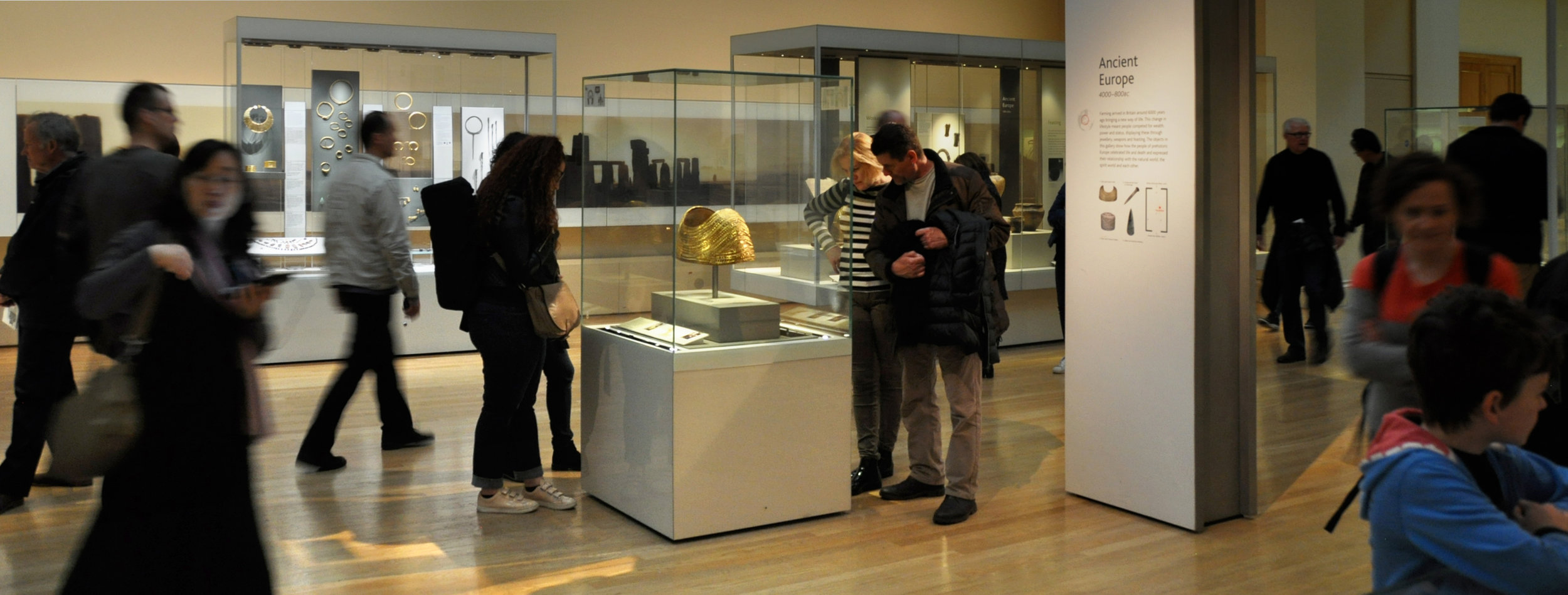
I love those snooping TV shows that look at how places work back-of-house . They were all the rage in the early 2000s – we saw what life was like in the back of a hotel, cruise ship, airport etc. And also museums as well. BBC Wales made a programme about the work of the British Museum while I was working there – The Museum – and BBC FOUR did a series a few years back looking at smaller museums and the issues they face.

I guess I’m pretty lucky in my job that I get to go back-of-house in museums and galleries quite often. In the last year I’ve got lost in the corridors of Kensington Palace (the public bit, not the royal household bit!) and wandered around basement of Buckingham Palace – I even sent my postcards from the Post Office in there. And I get to view and handle museum objects all the time. In fact, I often need to remind myself how lucky I am that I get the levels of access I do.

But there are loads of opportunities to see behind the closed doors of cultural buildings if you want to. There’s Open House each September, of course. And recently I’ve done a few behind-the-scenes tours of places that I’m interested in.

The BBC TV Centre tour is pretty interesting, perhaps mostly because it’s a chance to see a building in decline where programmes aren’t made on the same scale as they used to be. The National Theatre backstage tour is quite fun too, if you want to learn more about how a theatre operates – although it’s pretty heavy on the ideology of the institutions. Perhaps the most visually stunning one we’ve been on is the Houses of Parliament tour, which happens most Saturdays and during the summer recess – it’s not the greatest tour experience ever, but the building is just amazing and it feels like a real privilege to get inside the place.

And if you’re into buildings and design I can highly recommend the Barbican architecture tour which looks at how and why the housing complex and art centre looks and feels as it does today. At last, after 15 years of following the yellow line, the Barbican makes sense to me and I don’t get lost any more! The tour ends up in one of the service corridors of the complex where visitors get to see and touch the alternative experimental concrete finishes which the designers played with before they finally decided on how the Barbican would look – it’s quite mind-bending to see these alternative options and to imagine how the place could have ended up looking.

There are more tours planned, but they’re part of a surprise package for someone and I don’t want to let the cat out of the bag. But if you have an enquiring mind we can definitely recommend you go take a look behind-the-scenes of some of our nation’s cultural institutions.

New home for the postal museum

In Museum [Insider], Museums, new content on April 19, 2012 at 11:52 am

For a long time I’ve had a soft spot for the British Postal Museum and Archive, not because of any philatelic interest – I gave up stamp collecting many years ago – but rather because they’ve had a rough ride in the last few years. After having their collection dispersed around the country in a wide range of collection stores they were promised, a few years back, a new home in Swindon, right next door to the National Trust HQ, Heelis.

But that plan got scuppered and they were left to return to their various archives and libraries with leaky rooves and ageing facilities.

Well, it turns out that they now have another plan for a new home – and this one looks like it will work.

Better still, it’s not in Swindon but in the centre of London – not that there’s anything wrong with Swindon, of course. An old Post Office building near the Mount Pleasant sorting office is to be reconditioned, allowing them to bring their collections together into one place and stage exhibitions and displays.

I reckon the museum-going public are going to love it. There’s more than just stamps in the collection; it’s the entire history of the postal services in the UK over the last 400 years – pillar boxes, vehicles, design work, uniforms, toys etc.

There’s an article about the plans for the new museum, which is set to open in 2016, on Museum [Insider] now.

Roman Halter (1927-2012)

In Uncategorized on March 9, 2012 at 11:30 am

It is with great sadness that I read recently of the passing of Roman Halter.

I first met Roman at the Imperial War Museum, where his personal story is told in The Holocaust Exhibition. After I left the Museum, we continued to write to each other and occasionally meet up for coffee to chat about a variety of subjects, notably museums, architecture and where to get good food in north London.

When working with people in a museum context who have survived something as disturbing and life-changing as the Holocaust, it is sometimes easy to pigeon-hole them. They can perhaps be seen as Holocaust survivors and nothing else. Roman was one of the first survivors I met who really helped me to understand that although people may have lived through and witnessed terrible events as young people, they also have gone on to lead rich, diverse and fulfilling lives afterwards. The Holocuast is only part of a survivor’s life. And it happened 60 years ago – so much more has happened since then.

Roman is remebered today as a survivor of the Holocaust, yes, but also as an architect, a designer and an artist. And as a father and grandfather. It is perhaps fitting that the legacy he leaves behind is a physical one – there are countless Halter stained-glass windows around the world today and I am very proud to have one of his paintings hanging in my study as I write – and an historical one in terms of his personal story during the Second World War. I hope that his story is not forgotten, and that his art continues to inspire people to create beautiful things as well.

Indeed, it is at sad times like these that I am reminded of the power that museums and collecting institutions have in preserving the experiences and memories of people who have lived through periods which have shaped our world. Oral histories, personal possessions and documentary evidence all ensure that we won’t forget stories like this and we won’t forget people like Roman.

On the subject of collecting stories, Roman was kind enough to take part in my ongoing research project into the nature of happiness – a world away from museums, but still a project based around collecting stories. I visited him at his home in 2008 and we chatted for a few hours about his life and experiences in relation to happiness. You can read the interview on this website here. In April 2009 he also sent me a hand-written note with some further thoughts on happiness.

The interview was picked up by The Telegraph, who quoted my conversation with Roman in his obituary, which you can also read here to get a fuller picture of his life.

Follow

Get every new post delivered to your Inbox.